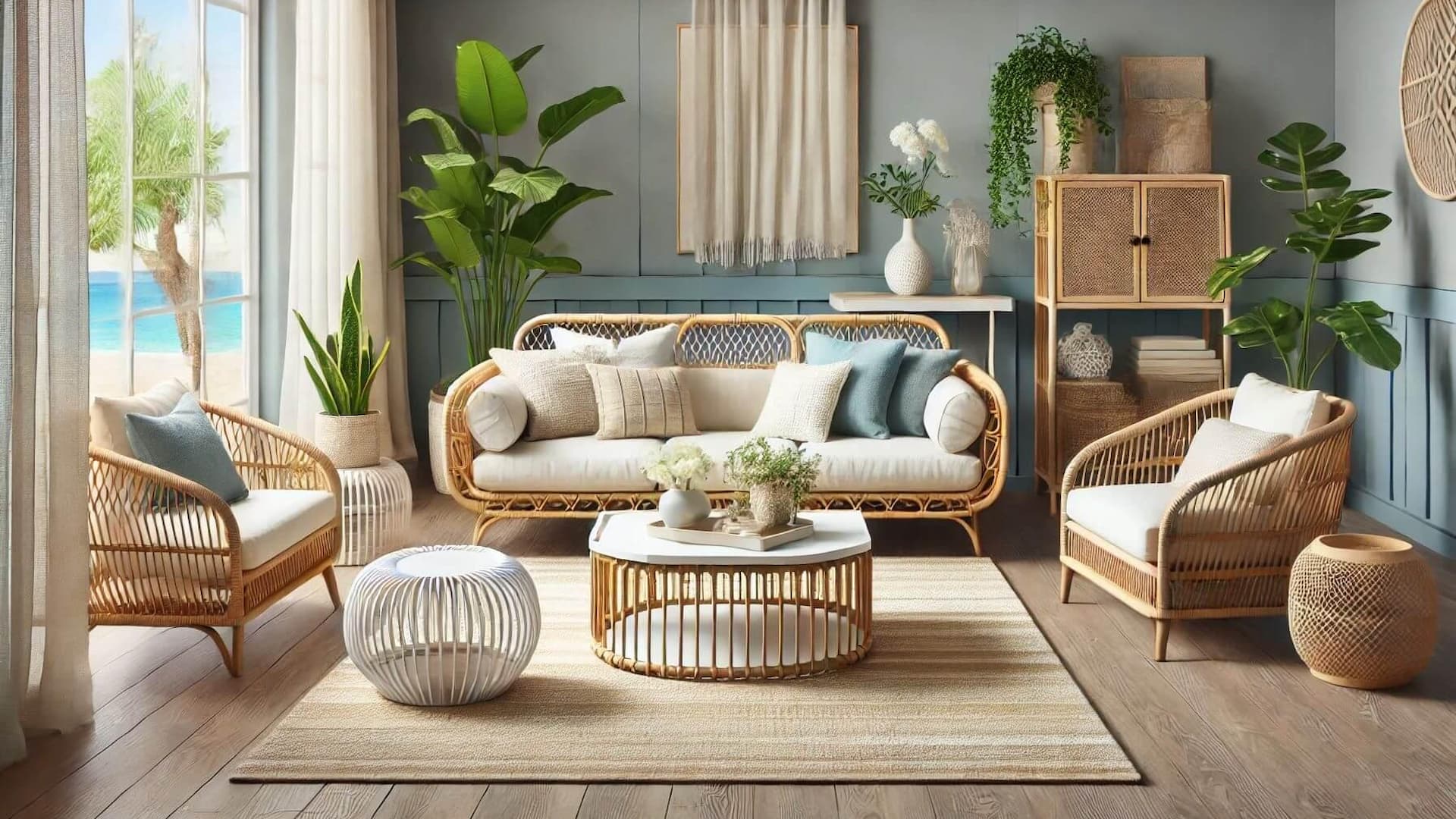

Most buyers don’t get rattan furniture wrong because of taste. They get it wrong because they assume all “rattan-style” furniture is essentially the same.
On a product page, a woven coffee table or chair can look soft, coastal, and perfectly aligned with a Hamptons-style interior. The tones are right, the styling is right, and the texture seems believable. But once it arrives in a real home, the difference becomes obvious. Some pieces feel calm, natural, and quietly premium. Others feel light, slightly plastic, or visually flat under daylight.
That gap rarely comes from design alone. It almost always comes from how the brand constructs the furniture, what materials it uses, and how much attention is given to the weaving and finishing process.
If you are already comparing coffee tables, especially after reading our
👉 Hamptons Style Coffee Table Guide,
then this is the layer that determines whether your final choice will actually hold up in a real space.

The First Difference Most Buyers Miss: Real Rattan vs “Rattan Look”
Before comparing brands, the most important distinction is not between expensive and cheap—it is between real material and simulated material.
Real rattan has a slightly uneven, organic character. The color is not perfectly uniform, the weave has subtle variation, and the surface interacts with light in a softer way. It never looks completely flat. Even in painted or treated finishes, there is still a sense of depth underneath.
Synthetic or low-cost “rattan-style” furniture tends to be more uniform. The pattern often repeats too cleanly, the color can feel slightly artificial, and under stronger natural light, the texture may look printed or plastic rather than woven.
This difference matters more than most people expect, especially in a Hamptons-style space. That style relies heavily on natural light, soft shadows, and layered textures. When the rattan element looks artificial, it breaks the illusion of calm, coastal living almost immediately.
What High-End Rattan Brands Actually Do Differently
When you look at well-known higher-end brands such as Serena & Lily, Palecek, or Sika Design, the difference is not just branding. It is structural.
The first thing you notice is weight and proportion. High-quality rattan furniture does not feel fragile. The frames are thicker, the curves are more controlled, and the overall shape feels intentional rather than decorative.
The second difference is in the weaving itself. On better pieces, the weave is tight but not overly perfect. There is a rhythm to it, but also slight variation, which gives it a natural feel. You can often see small differences in tone within the same surface, which adds depth instead of making the piece look flat.
The third difference is finishing. Good rattan furniture rarely looks glossy or heavily coated. Even when painted white or sealed, the finish tends to be soft, matte, and slightly absorbent to light. This is what allows it to sit naturally next to linen fabrics, wood surfaces, and neutral palettes.
These brands also tend to design furniture as part of a larger environment. A rattan chair is not just a chair—it is meant to work with wood tones, textiles, and lighting conditions typical of coastal interiors. That is why their pieces often look more “settled” in a room, even before styling.
The trade-off, of course, is price. But what you are paying for is not just material—it is consistency in how the material is handled.
Where Mid-Range Brands Get It Right (and Where They Don’t)
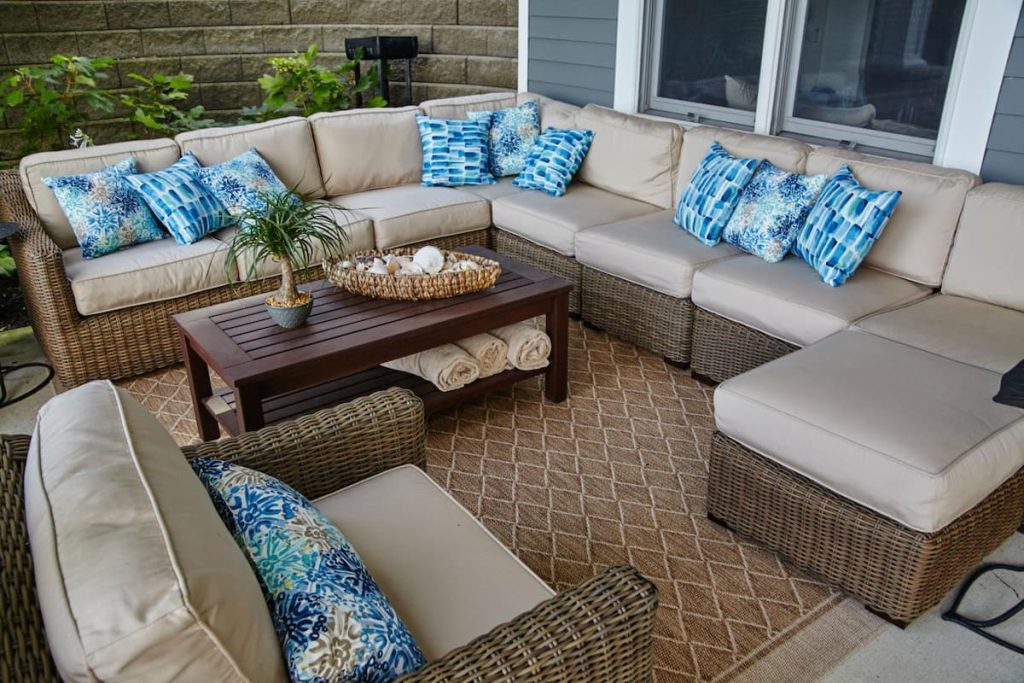
Mid-range brands sit in a more complicated space. They often combine real materials with engineered structures, or mix natural rattan with manufactured components to control cost.
When done well, this category can offer very good value.
You may see plywood frames with real rattan panels, or solid wood structures with simplified weaving patterns. Visually, these pieces can come very close to higher-end designs, especially when styled correctly.
However, this is also where inconsistency appears.
Some pieces look excellent in photos but feel lighter or less stable in person. Others use real rattan, but the weave is looser, or the finishing is slightly rough around edges and joints. These are not always deal-breakers, but they affect how the furniture ages.
For buyers, this means one thing: this category requires closer inspection.
Reviews become important. Product images need to be examined more carefully. Close-up photos of weaving, edges, and joints tell you much more than styled room shots.
When you find a well-executed mid-range piece, it can be one of the best purchases you make. But it is not a category where you can rely on brand name alone.
Mass-Market “Rattan Style” Furniture: Why It Often Falls Short
At the lower end of the market, many products are designed primarily for visual impact at a low cost.
These pieces often use MDF or particle board structures with printed or molded rattan patterns. From a distance, especially in online listings, they can look surprisingly convincing. But the difference becomes clear under real use.
The texture lacks depth. The surface reflects light in a harder, more artificial way. Edges and corners reveal the underlying material. Over time, wear becomes visible much faster—especially around joints, edges, and high-contact areas.
This is not necessarily a problem if expectations are aligned. For temporary spaces, rental setups, or purely decorative purposes, these pieces can still serve a role.
But for buyers aiming to build a cohesive Hamptons-style living space, these products often become the element that feels “off,” even when everything else is styled correctly.
How to Compare Brands Before You Buy
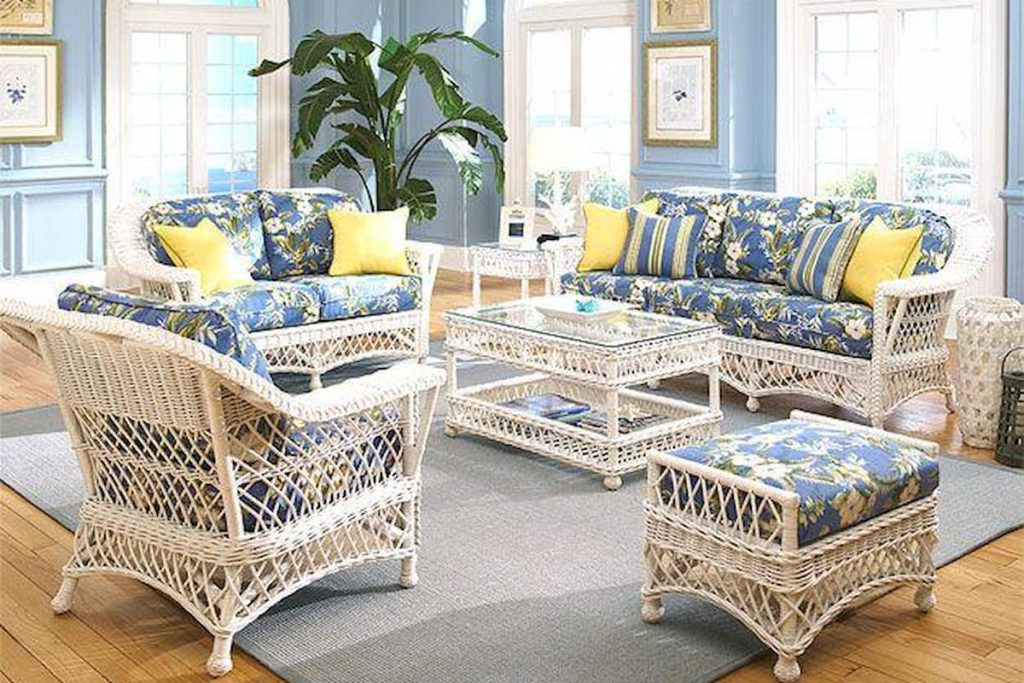
The most effective way to compare rattan furniture is not by brand reputation alone, but by looking at a few consistent indicators.
Start with the material description, but don’t stop there. Words like “rattan,” “cane,” or “wicker” can be used loosely. Look for more specific indications of natural material or construction.
Then look at the weave itself. Real rattan rarely looks perfectly uniform. Slight variation is a positive sign. Overly repetitive patterns often indicate synthetic or printed materials.
Edges and joints are equally revealing. Clean transitions between wood and woven sections suggest better craftsmanship. Rough or uneven areas usually indicate lower production standards.
Finally, consider how the piece interacts with light. High-quality rattan tends to soften light and create subtle shadows. Lower-quality materials often reflect light more harshly, making the surface appear flatter.
Why This Matters for Your Coffee Table Choice
If you are choosing a coffee table, this comparison becomes even more important.
A coffee table sits at the center of the living room. It is one of the most visible and most used pieces of furniture. If the rattan detail feels authentic, it enhances everything around it—wood tones, textiles, and overall atmosphere. If it feels artificial, it can quietly lower the quality of the entire space.
That is why, before making a final decision, it is worth going back and comparing materials carefully.
👉 If you haven’t yet, read:
Hamptons Style Coffee Table Guide: Wood Types, Finishes & Buying Tips
Understanding both the wood structure and the rattan element together is what allows you to make a choice that not only looks right in photos, but also feels right in your home.
Good rattan furniture does not try to stand out aggressively. It blends, softens, and supports the space around it.
The best brands understand this. They focus on proportion, texture, and finish rather than just appearance.
As a buyer, the goal is not to find the most expensive option, but to recognize the difference between something that is built to look good for a moment, and something that will continue to feel right over time.