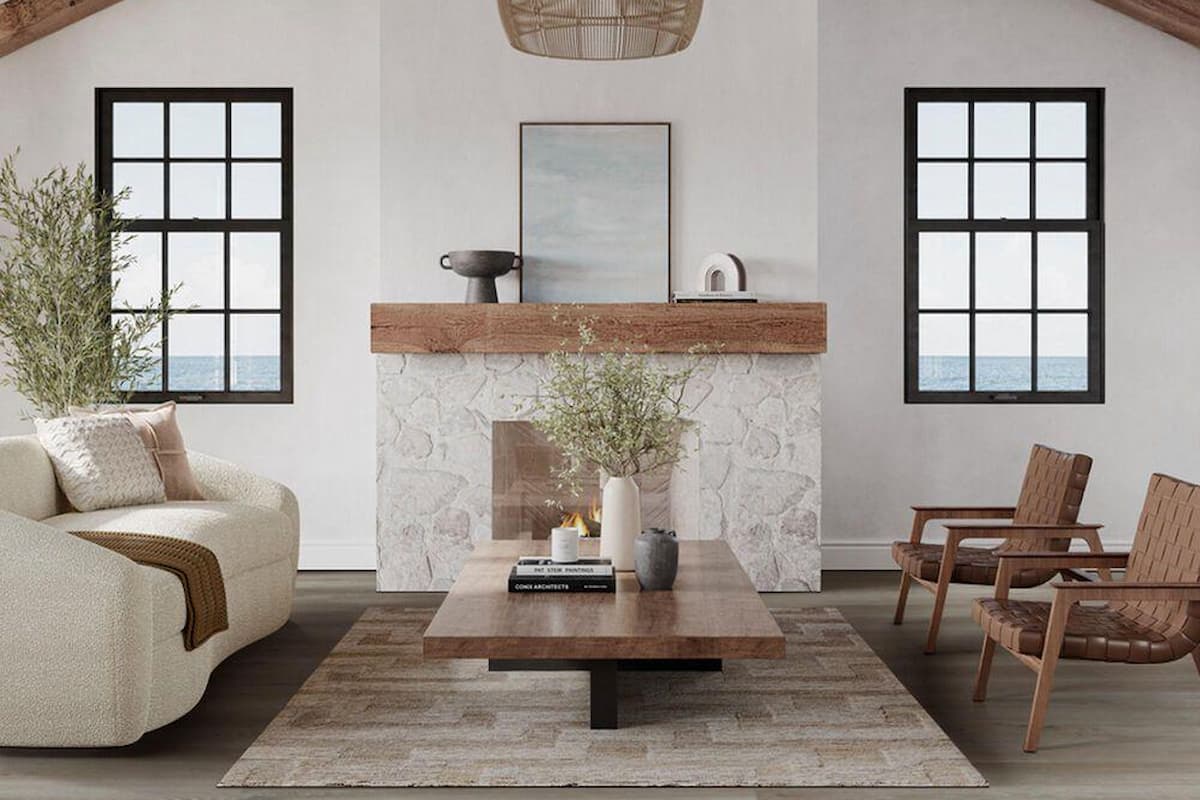

Wood Materials: Don’t Just Focus on Looks — Choose What Truly Fits Hamptons Style
What makes a Hamptons-style coffee table feel clean, bright, and effortlessly coastal is not simply its light color. The real difference comes from the wood itself—its grain pattern, density, finishing technique, and how it reflects light within the space.
Two coffee tables can look almost identical in photos. Both may appear light-toned, both may include rattan details, and both may be labeled “coastal style.” But once placed in a real living room, one will feel calm, natural, and refined, while the other may look flat, yellow, or overly mass-produced. That difference almost always comes down to the material.
Among all options, white oak and rubberwood are the two most common solid wood choices used in Hamptons-style coffee tables, and understanding how they behave is essential before buying.
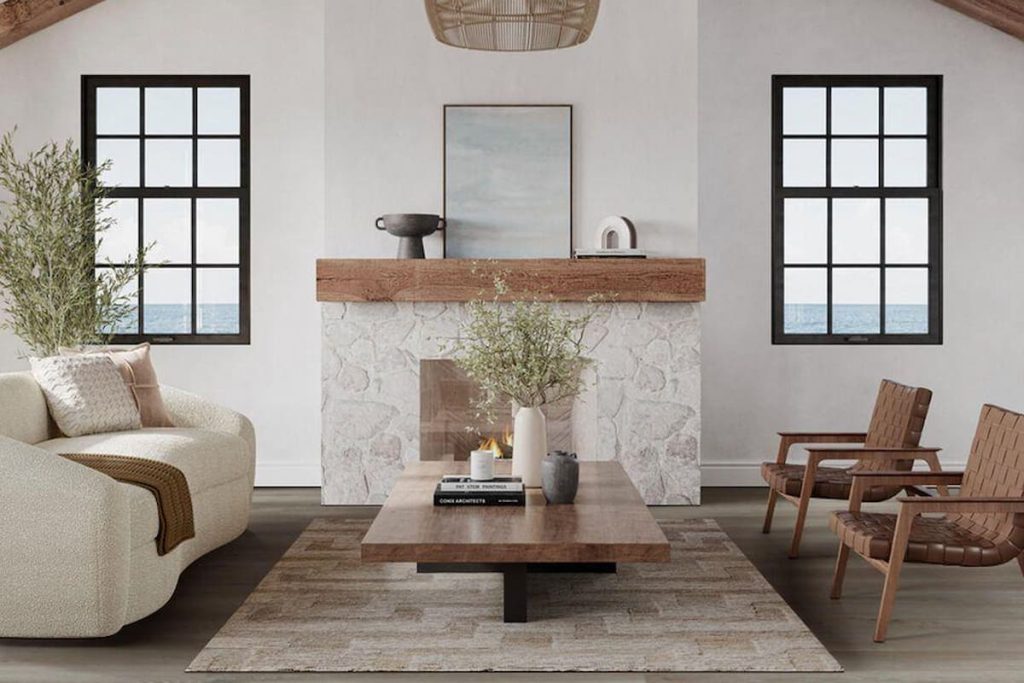
White Oak: The Most Reliable Choice for a Refined, High-End Coastal Look
If budget allows, white oak is one of the most dependable materials for achieving an authentic Hamptons aesthetic. Its value is not just in price, but in how naturally it aligns with the style.
White oak typically features a straight, subtle grain with a tone that ranges from pale beige to soft honey or light grey-brown. It avoids the heaviness of darker hardwoods and the softness of lighter, lower-density woods, creating a balance that feels both structured and relaxed.
In a Hamptons living room—where white walls, linen upholstery, woven textures, and neutral palettes dominate—white oak plays a stabilizing role. It adds warmth without visual weight, and texture without clutter.
From a practical standpoint, white oak also performs well under daily use.
First, it is dense and durable. A coffee table is one of the most frequently used pieces in the living room. It holds trays, books, drinks, and decorative objects, and often absorbs small impacts over time. White oak handles this level of use better than softer woods, maintaining its structure and surface integrity.
Second, it responds exceptionally well to light finishes. Many Hamptons-style tables are not left in raw wood tone, but treated with whitewash, matte sealers, or soft grey finishes. White oak retains its grain under these treatments without turning yellow or overly flat, which is critical for maintaining a refined look.
Third, it integrates seamlessly with other materials. Whether paired with rattan, linen, ceramic, or glass, white oak does not compete—it supports the overall composition of the room.
The trade-off is cost and weight. White oak tables are typically more expensive and heavier, which can make them less practical for temporary setups. For most buyers, it is best reserved for a main living space where long-term quality matters.
Rubberwood: A More Budget-Friendly Solid Wood Option That Depends on Finish Quality
Rubberwood sits in a more accessible price range while still offering the benefits of real wood. However, unlike white oak, it relies much more on craftsmanship and finishing to achieve a similar visual effect.
Its natural tone is warmer—often leaning toward pale yellow or light brown—and its grain is less defined. This means that without proper finishing, rubberwood can look less refined or slightly dull in comparison.
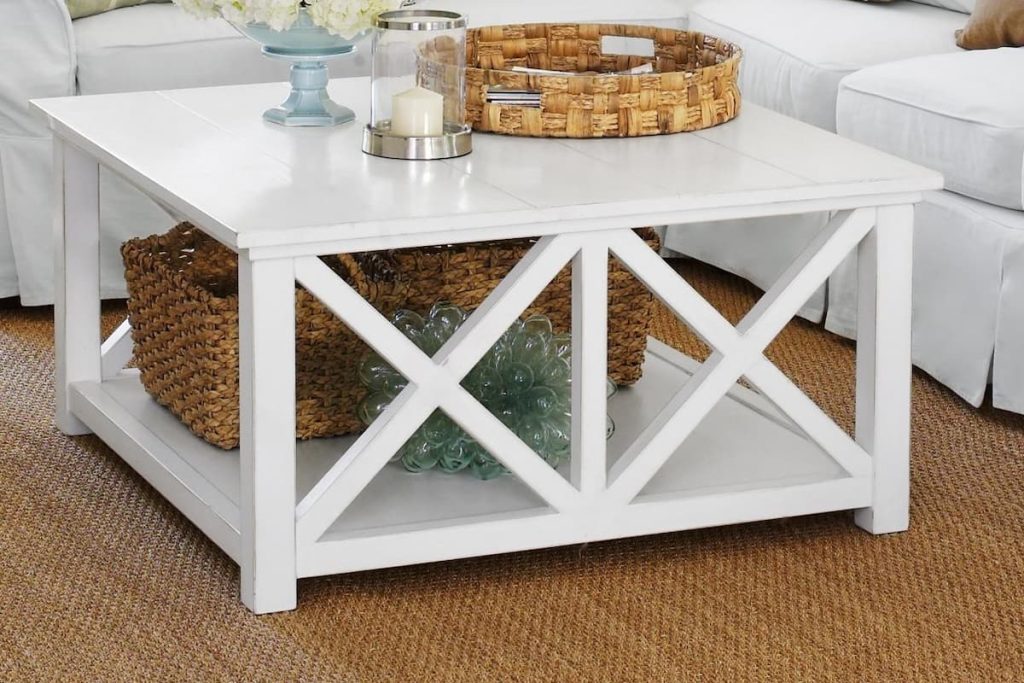
When done well, however, rubberwood can still perform effectively in a Hamptons setting. It works particularly well in designs that combine:
- Painted frames in white or off-white
- Light surface finishes
- Rattan or cane panel details
These combinations help balance the natural warmth of the wood and bring it closer to a coastal aesthetic.
Rubberwood’s advantages are clear.
It is more affordable, making it easier to access larger tables or designs with storage features such as shelves or drawers. It is also structurally stable enough for everyday use, meaning it can handle typical living room demands without significant issues.
Additionally, it works well as a base material for painted finishes. Many classic Hamptons-style tables—especially those with white frames and woven details—use rubberwood beneath the paint layer.
However, the quality of execution is critical. Poorly finished rubberwood tables often show problems such as uneven staining, rough edges, thin paint layers, or visible joins. These issues can quickly reduce the perceived quality of the piece.
When shopping for rubberwood, reviews become especially important. Phrases like “finish is uneven” or “looks cheaper in person” are strong indicators that the material has not been handled well.
Engineered Wood: The Most Budget-Friendly Option, but Only If You Know What You’re Buying
Engineered wood is often where Hamptons-style coffee tables become more accessible in price, but also where the quality gap becomes the widest. Unlike solid wood, this category includes a range of materials such as MDF, particle board, plywood, and veneer constructions. On the surface, many of these tables look almost identical to solid wood versions, especially when paired with rattan panels and light finishes. The real difference only becomes clear after closer inspection and daily use.
The advantage of engineered wood is obvious. It allows manufacturers to produce larger, lighter-toned, more detailed coffee tables at a significantly lower cost. This is why many “Hamptons-style” tables you see online—especially those with drawers, shelves, and woven panels—are built on engineered structures. Visually, they can achieve the same coastal look, but structurally and long-term, not all are equal.
The key is not to judge engineered wood as a single category, but to understand what type of engineered construction you are actually buying.
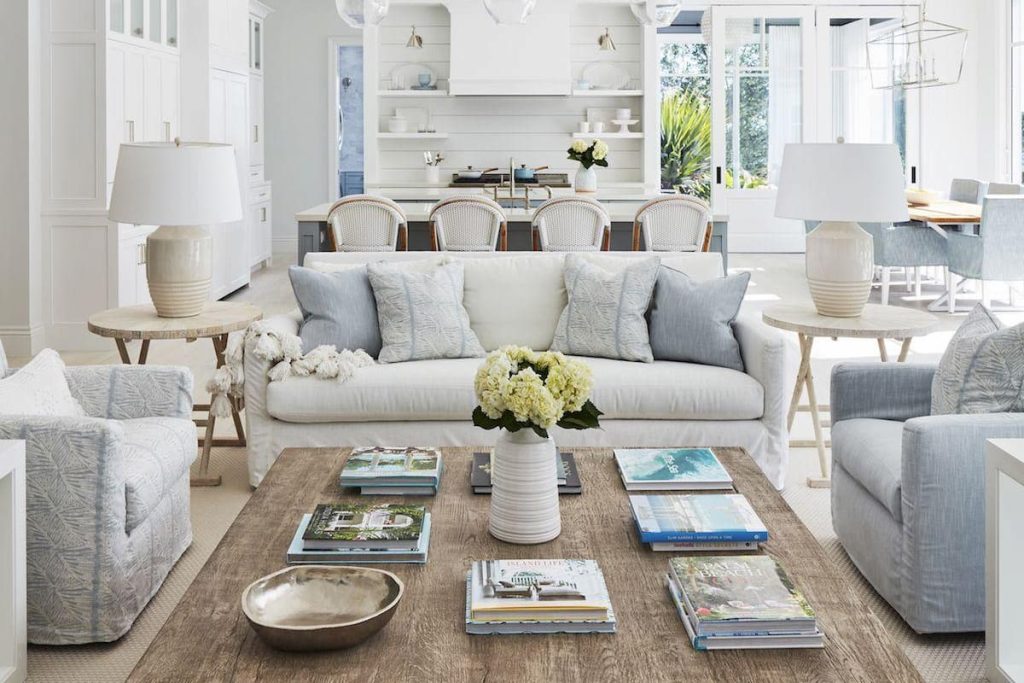
MDF / Particle Board: Suitable for Budget Styling, but Limited in Durability
At the lower end of engineered wood, MDF and particle board are the most common materials. These are widely used because they are inexpensive, easy to shape, and ideal for painted finishes or laminated surfaces.
For Hamptons-style coffee tables, MDF and particle board are often used to create clean, coastal-inspired designs that look appealing in photos. However, their limitations appear over time.
They are more sensitive to moisture, impact, and daily wear. Edges can swell, surfaces may chip, and finishes can degrade faster than expected. Because coffee tables are used frequently, these issues tend to appear sooner than in other furniture.
This category is best suited for short-term use, rental spaces, or budget-focused setups where visual styling is the priority rather than long-term durability.
Plywood & Veneer Construction: A Practical Balance Between Look and Cost
Plywood and veneer constructions offer a more reliable alternative within engineered wood. When combined with real wood veneer—such as oak or ash—they can produce a surface that closely resembles solid wood.
This makes them one of the most practical choices for mid-range buyers.
A well-made veneered coffee table delivers natural grain, better visual depth, and improved stability compared to lower-end board materials. It also tends to integrate more naturally into a Hamptons interior filled with soft textures and neutral tones.
However, quality still varies. Buyers should check for realistic grain patterns, clean edges, and finishes that do not appear overly glossy or artificial.
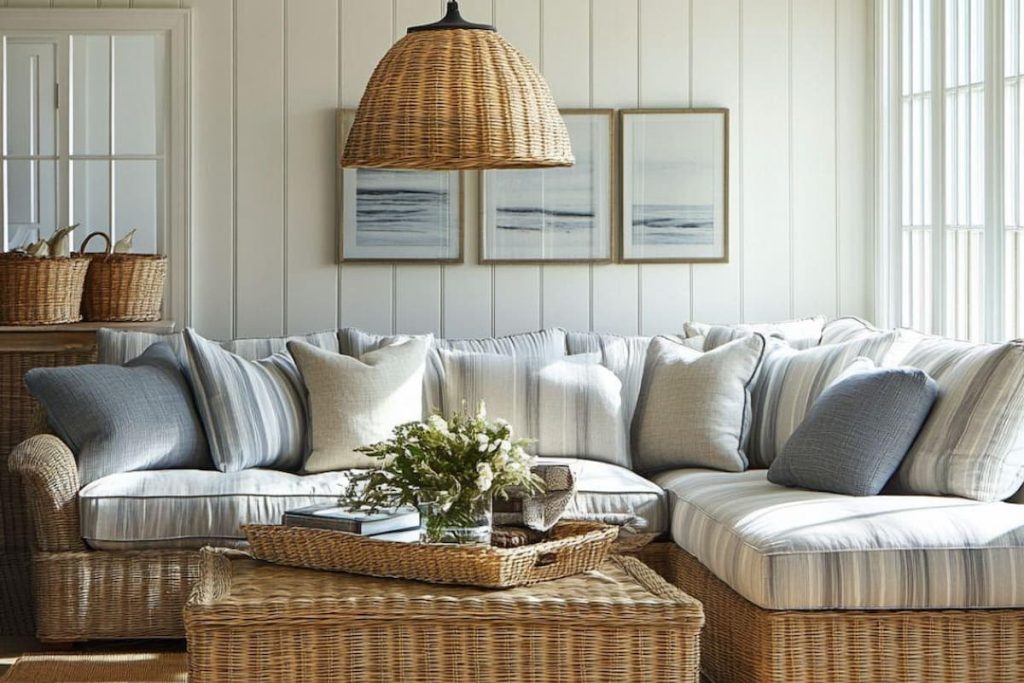
Painted Wood: The Most Classic Hamptons Expression, but Highly Dependent on Finish Quality
Painted wood is one of the most recognizable features of Hamptons-style furniture. It enhances brightness and helps create the clean, airy atmosphere associated with coastal interiors.
The success of painted wood depends heavily on finish quality.
A good painted table will have a soft matte or eggshell finish, even color distribution, and a warm white tone. A poor one may look overly glossy, uneven, or prone to chipping and discoloration.
One of the most effective combinations is a painted base paired with a natural wood top, balancing brightness with warmth.
6. How to Choose the Right Material Based on Your Needs
Different materials suit different buyers.
White oak is ideal for long-term investment and refined interiors.
Rubberwood offers a practical balance between cost and structure.
Veneered constructions provide strong visual value at a moderate price.
MDF and particle board serve short-term or budget-driven needs.
Painted wood works best for bright, classic coastal spaces.
The key is choosing based on usage, budget, and the overall quality level of the room.
7. Practical Buying Criteria: What to Check Before You Buy
When evaluating a coffee table, focus on real details rather than labels.
The tabletop should show natural variation and a soft finish.
Edges should be smooth and well-finished.
Woven elements should look authentic and balanced.
Legs should feel proportionate and stable.
Colors should remain within soft, neutral coastal tones.
These factors determine whether the table will feel integrated into a Hamptons-style interior or stand out in a negative way.
Final Tip: Compare with Real Rattan Furniture Brands Before You Buy
Before making a final decision, it is worth comparing how different manufacturers combine wood, rattan, and finishes in real products.
👉 Explore our guide:
Best Rattan Furniture Brands: Materials, Craftsmanship & Style Comparison
This will help you understand how high-quality Hamptons-style furniture is actually constructed—and what to look for when comparing options