
For decades, people have been conditioned to believe that a beautiful courtyard or lush balcony garden inevitably demands endless pruning, watering, fertilizing, and constant upkeep. The image of the exhausted “weekend gardener” has become deeply tied to modern landscaping culture.
But the reality is far more liberating.
A truly sophisticated outdoor space is not built through excessive maintenance — it is built through intelligent plant selection.
By choosing plants with exceptional environmental adaptability, restrained growth habits, and innate sculptural beauty, it becomes possible to create a self-sustaining Low-Care Ecosystem: a layered garden composition that feels alive, architectural, and emotionally calming without turning maintenance into a second job.
The secret lies in allowing nature’s own logic to do the heavy lifting.
Instead of fighting against climate, sunlight, wind, or soil conditions, low-maintenance courtyard design works with them — combining drought-tolerant structural trees, evergreen geometry, aromatic perennials, and shade-adapted foliage into a living system that naturally stabilizes itself over time.
The result is not merely a “garden,” but a breathing outdoor canvas:
quietly evolving through the seasons while requiring remarkably little from its owner.
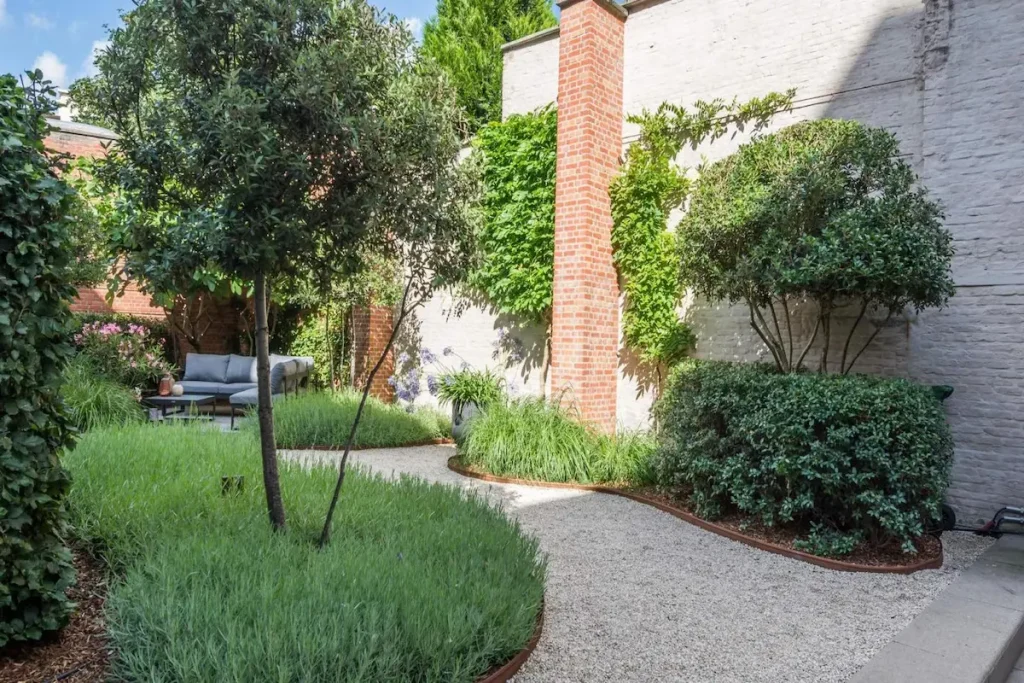
Architectural Backbone: Vertical Impact & Structural Greenery
The foundation of every refined low-maintenance courtyard begins with structure.
These are the plants that establish spatial rhythm, visual height, privacy, and permanence. Their role is architectural rather than decorative — creating the garden’s “bones” while demanding minimal pruning or intervention.
Olive Trees — Quiet Luxury in Botanical Form
Few plants embody understated luxury quite like the olive tree.
Its silvery-green foliage, weathered trunk texture, and soft Mediterranean movement instantly bring calm sophistication into a courtyard environment.
The muted gray-green palette pairs naturally with:
stone
concrete
limewash walls
warm wood
black metal architecture
An olive tree functions beautifully as:
a standalone specimen tree
a courtyard centerpiece
a sculptural anchor inside oversized planters
Low-Maintenance Advantage
Olive trees thrive precisely because they ask for so little.
They are:
highly drought tolerant
adapted to poor soil
naturally slow growing
resistant to harsh summer heat
Unlike fast-growing ornamental trees that quickly overwhelm small spaces, olive trees maintain elegant proportions for years with only occasional shaping.
In many modern courtyards, a single olive tree can visually replace an entire collection of high-maintenance plants.
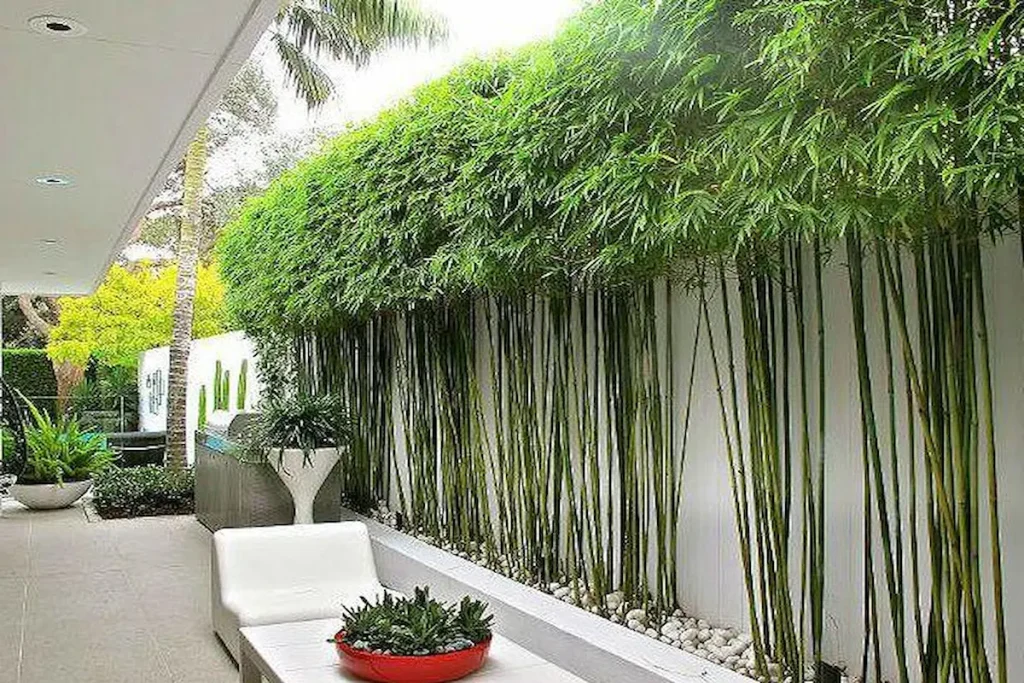
Bamboo — The Minimalist Privacy Wall
Bamboo introduces an immediate sense of calm, rhythm, and vertical clarity.
Its clean upright canes complement:
minimalist architecture
Japanese-inspired gardens
contemporary urban courtyards
narrow balconies needing privacy
When wind moves through bamboo leaves, the gentle rustling sound adds a therapeutic sensory layer that many hardscape-heavy spaces lack.
Low-Maintenance Advantage
The key is selecting clumping bamboo rather than invasive running varieties.
Clumping species:
stay compact
form dense natural privacy screens
require minimal pruning
maintain elegant narrow footprints
Compared with traditional hedges, bamboo establishes privacy much faster while remaining visually lighter and easier to manage in tight spaces.
Sculptural Definition: Defining Edges & Textures
Once the structural layer is established, the next step is introducing evergreen geometry and controlled texture.
These plants define pathways, corners, transitions, and visual boundaries while maintaining clean forms throughout the year.
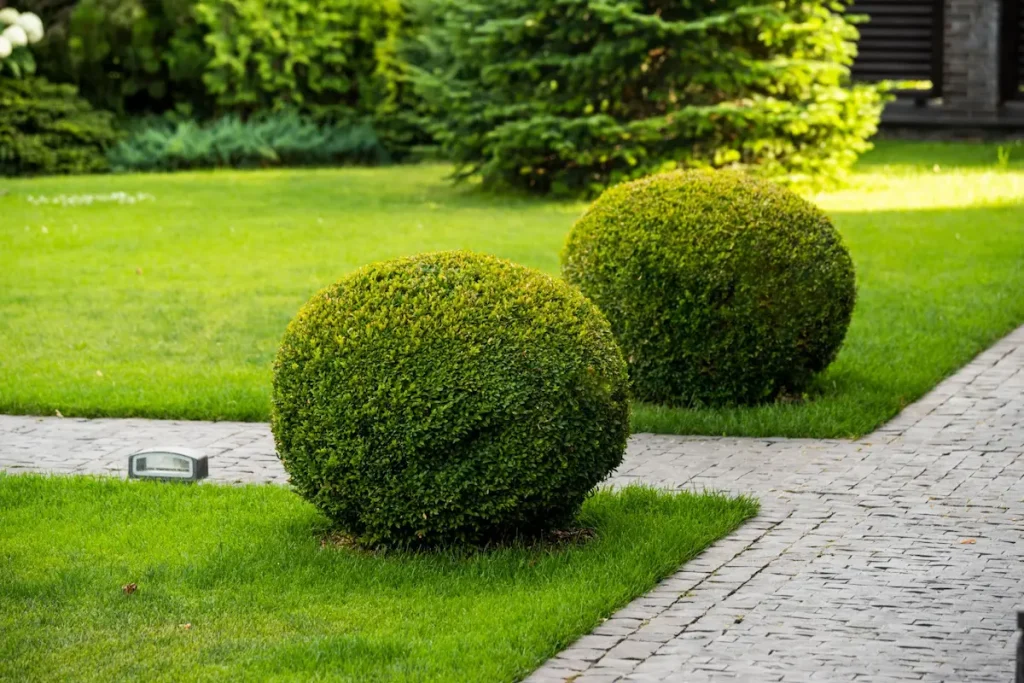
Boxwood — Evergreen Architectural Geometry
Boxwood is timeless because it transforms greenery into architecture.
Its dense evergreen foliage can be shaped into:
spheres
cubes
low borders
crisp linear hedges
These geometric forms create visual order and sophistication, especially in modern or European-inspired courtyards.
Low-Maintenance Advantage
Once established, boxwood becomes remarkably self-sufficient.
It tolerates:
drought
partial shade
cold temperatures
urban environments
Most importantly, it grows slowly and predictably.
One or two light trims annually are often enough to maintain perfectly defined shapes year-round.
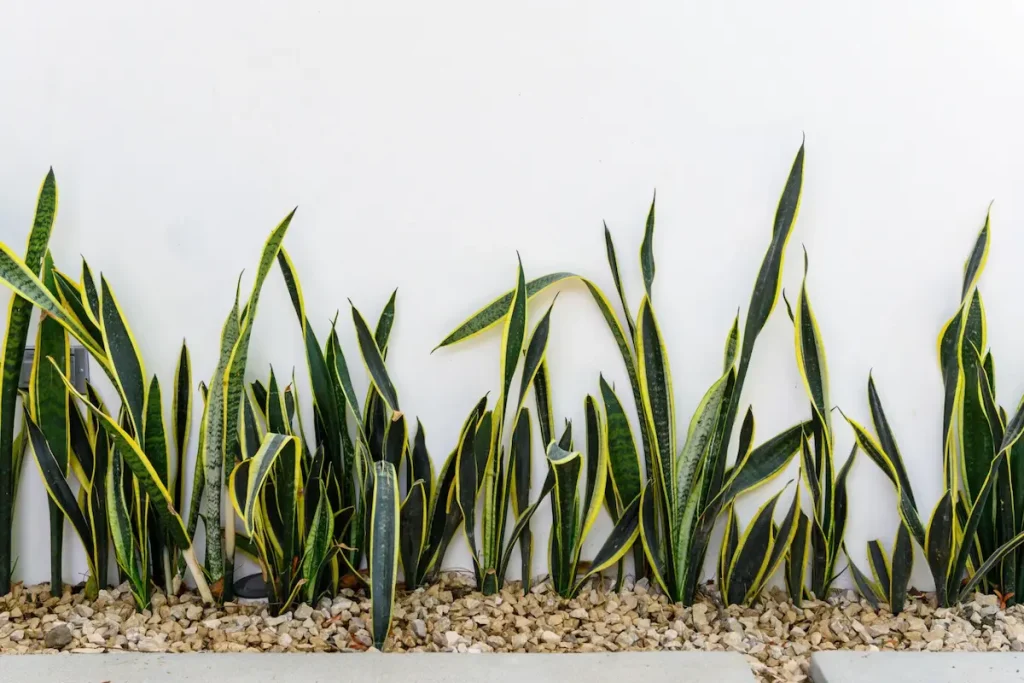
Snake Plants — Indestructible Vertical Sculpture
Snake plants introduce sharp vertical energy into otherwise horizontal courtyard compositions.
Their upright sword-like leaves create:
contrast
rhythm
visual tension
modern sculptural character
They work especially well in:
black concrete planters
minimalist patios
covered balconies
transitional indoor-outdoor spaces
Low-Maintenance Advantage
Snake plants are famously resilient.
They tolerate:
neglect
irregular watering
low light
heat
dry air
In protected outdoor spaces or semi-shaded courtyards, they often require almost no intervention beyond occasional watering.
For busy homeowners, they function as nearly maintenance-free living sculptures.
Sensory Layering: Aroma, Color & Soft Textures
Once the architectural framework is complete, softer sensory elements bring emotional warmth into the space.
These plants introduce movement, fragrance, seasonal bloom, and tactile softness while still remaining highly resilient.
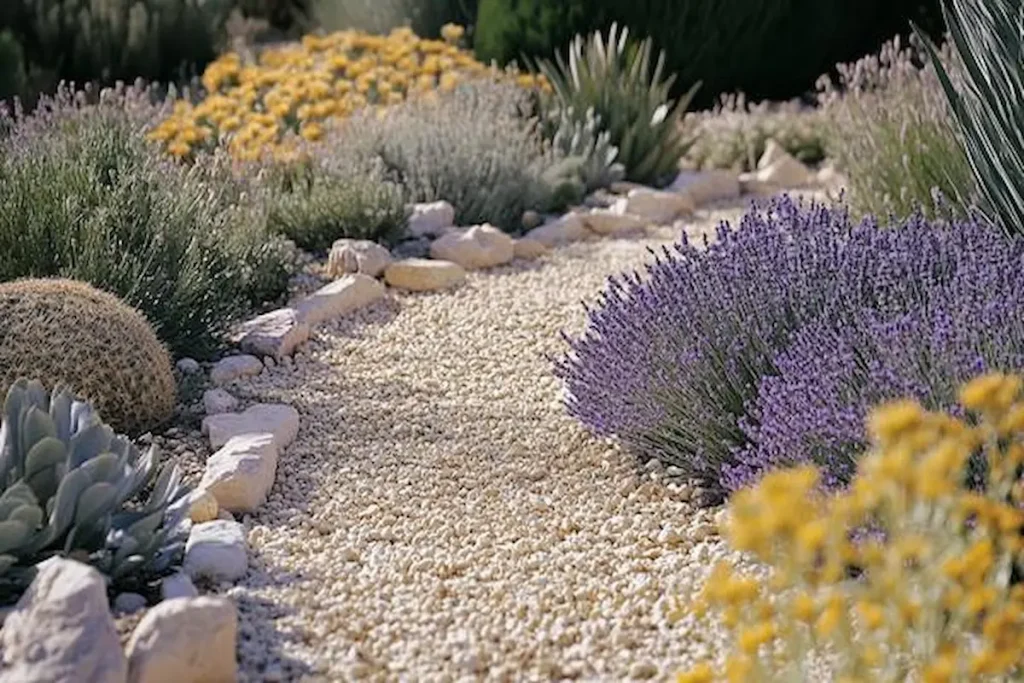
Lavender — The Fragrance System of Sunlight
Lavender softens rigid architectural spaces with its hazy purple blooms and silver-blue foliage.
It creates a natural “sun-washed” atmosphere associated with:
Mediterranean gardens
relaxed luxury
countryside minimalism
The combination of movement, color, and scent adds emotional depth without visual heaviness.
Low-Maintenance Advantage
Lavender thrives through intentional neglect.
As long as it receives:
full sun
excellent drainage
airflow
…it generally prefers poor soil and infrequent watering.
Overwatering and over-fertilizing are often more harmful than under-care.
This makes lavender ideal for:
gravel gardens
dry borders
exposed terraces
drought-prone climates
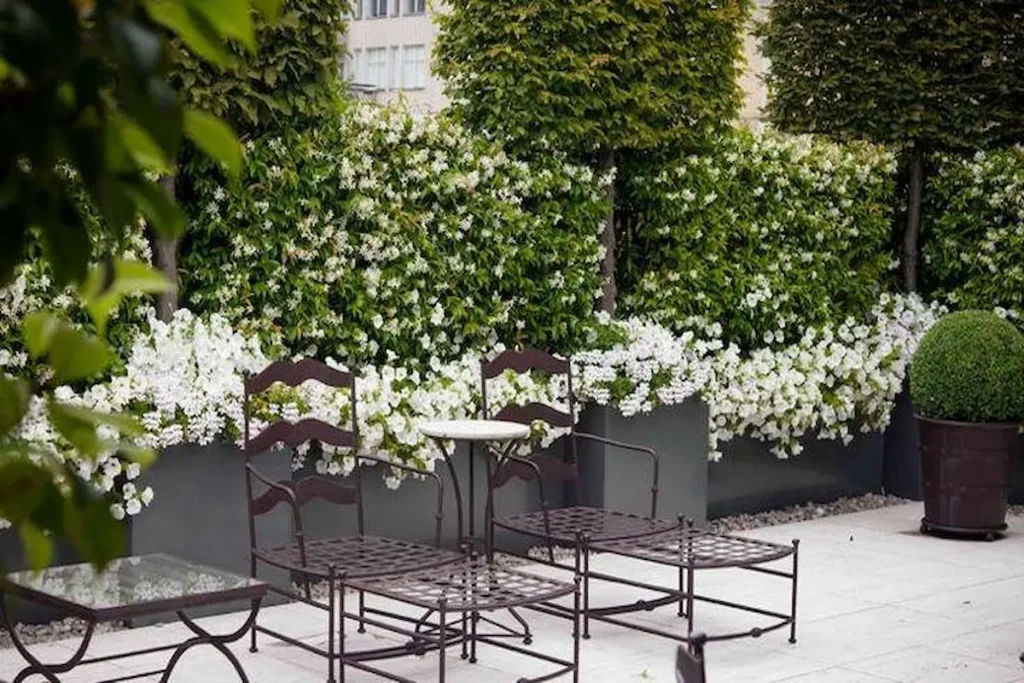
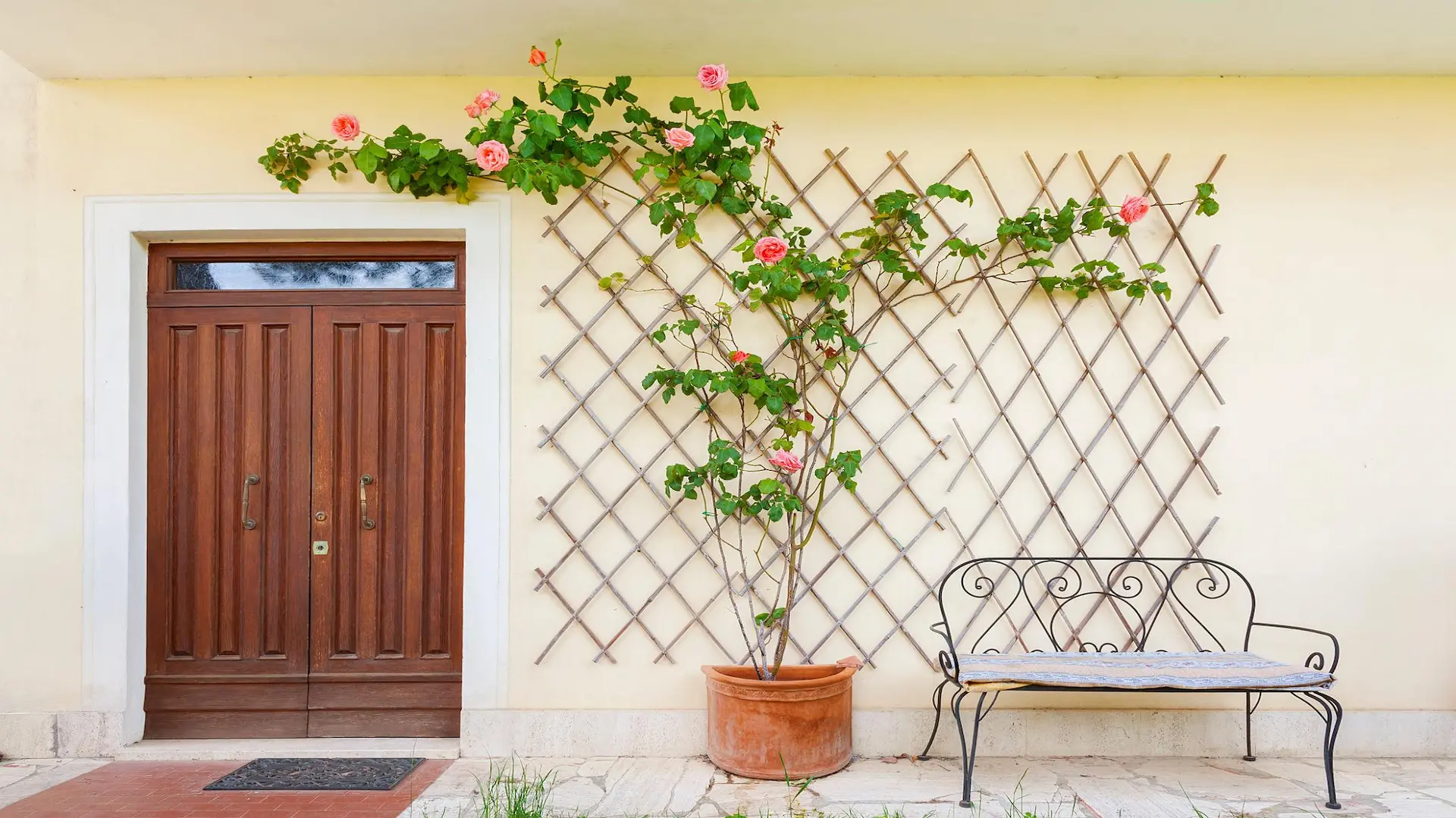
Jasmine — Vertical Fragrance for Living Walls
Jasmine transforms blank vertical surfaces into soft living architecture.
Its white flowers and glossy foliage elegantly soften:
walls
fences
pergolas
trellises
At night, its fragrance creates an atmosphere that feels intimate, luxurious, and deeply calming.
Low-Maintenance Advantage
Hardier jasmine varieties such as star jasmine are surprisingly durable.
Compared with demanding flowering climbers like roses, they:
resist pests more effectively
require less pruning
tolerate heat and humidity
naturally fill vertical surfaces over time
Rather than constantly controlling them, the best strategy is often simply guiding their growth direction and allowing them to establish naturally.
The Micro-Ecosystems: Navigating Sun & Shade
The final layer addresses the most difficult zones in any courtyard:
harsh full-sun exposure
permanently shaded dead corners
Instead of forcing unsuitable plants into these areas, low-maintenance design embraces specialized plant ecosystems adapted to each condition.
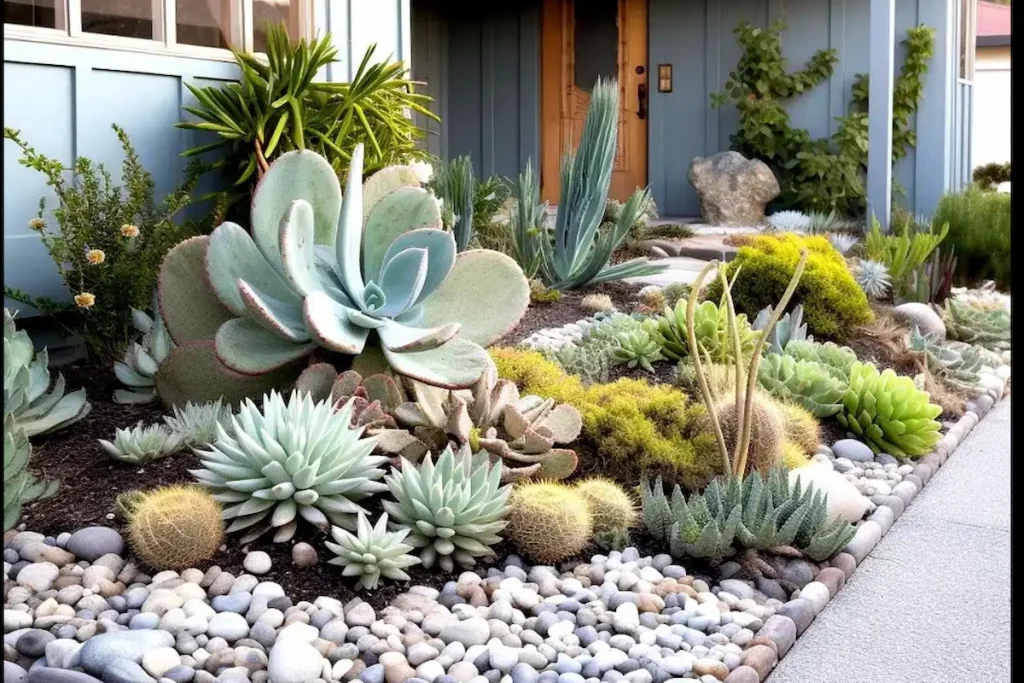
The Sun Alliance: Succulents
Perfect for:
exposed terraces
stone planters
rooftop gardens
dry wall crevices
intensely sunny balconies
Low-Maintenance Advantage
Succulents store water directly within their leaves and stems, allowing them to survive prolonged drought conditions effortlessly.
They pair exceptionally well with:
drip irrigation systems
gravel mulch
modern hardscape materials
In many climates, natural rainfall alone may sustain them for extended periods.
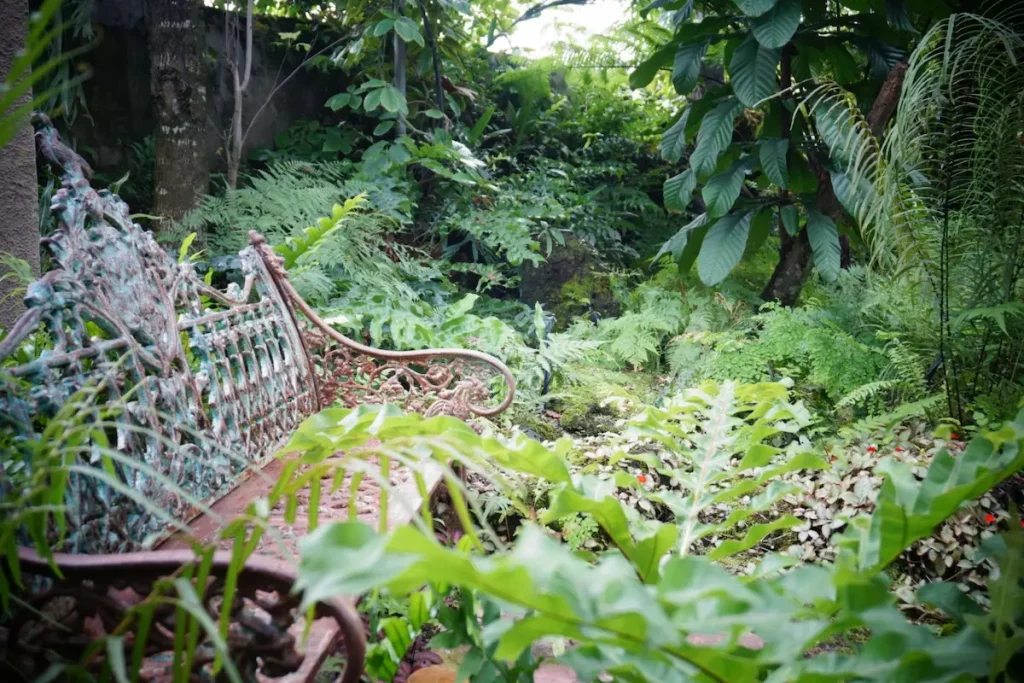
The Shade Sanctuary: Ferns
Ideal for:
north-facing walls
enclosed courtyards
tree-covered corners
shaded balconies
humid side passages
Low-Maintenance Advantage
Unlike flowering plants that struggle in darkness, ferns naturally evolved for shaded, moisture-rich environments.
As long as soil remains lightly moist, varieties such as:
Boston ferns
sword ferns
maidenhair ferns
will continuously produce lush layered greenery even in spaces where most ornamental plants fail completely.
Their feathered texture also beautifully balances the sharper geometry of stone, concrete, and minimalist architecture.
The true essence of low-maintenance gardening is not reducing beauty — it is reducing resistance.
A successful courtyard ecosystem works because every plant has been chosen according to its natural behavior rather than forced into unsuitable conditions.
In this approach, plant intelligence replaces human labor.
The olive tree provides enduring structure.
Boxwood introduces disciplined geometry.
Lavender fills the air with warmth and movement.
Ferns quietly reclaim the shadows.
Together, these layers create something far more meaningful than decoration:
a self-sustaining living canvas that breathes, evolves, and softens everyday life without demanding constant attention in return.
And perhaps that is the ultimate luxury of modern garden design —
not a garden that requires endless work,
but one that allows you to finally sit down, slow your breathing, and simply enjoy being there.