
An outdoor pet house is one of those purchases that looks simple—but is rarely chosen well.
Most people focus on appearance first. They look for something that matches the yard, feels clean, and fits visually into the space. Others focus only on durability—choosing something that looks “tough” enough to survive outdoors. But the best outdoor pet houses are not built around a single priority.
They succeed because they balance three things at once:
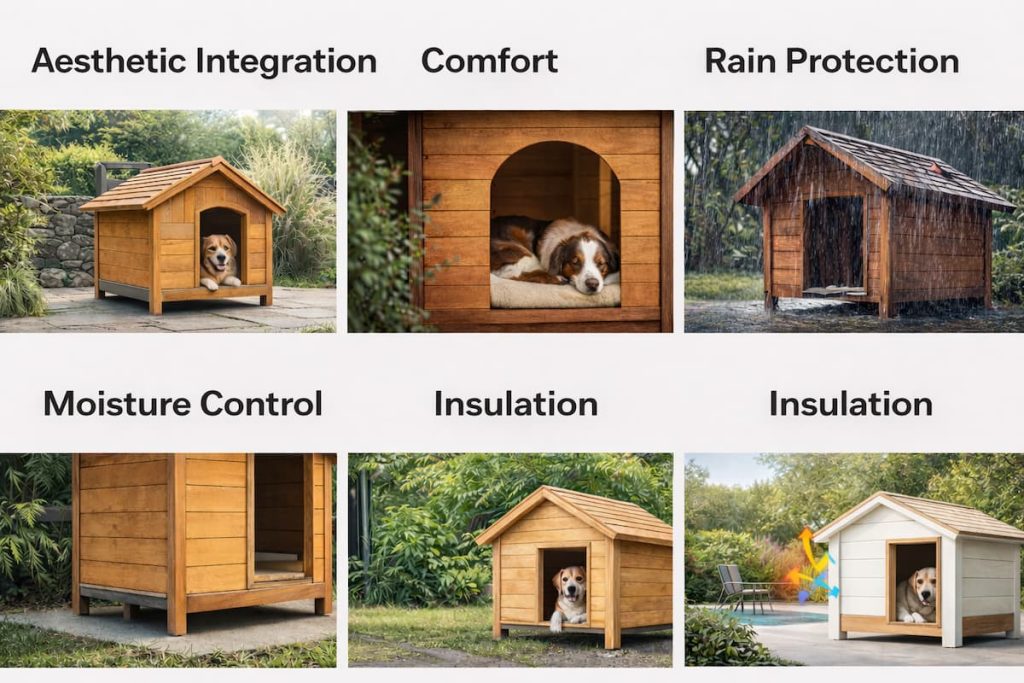
- They look intentional in the space (aesthetic integration)
- They feel comfortable and secure for the animal (real comfort, not just size)
- They perform under weather stress (rain, moisture, heat, and time)
And within that third category—performance—three elements quietly define everything:
👉 rain protection, moisture control, and thermal insulation
If any of these are poorly handled, the shelter may still look good—but it will not feel right in real use.
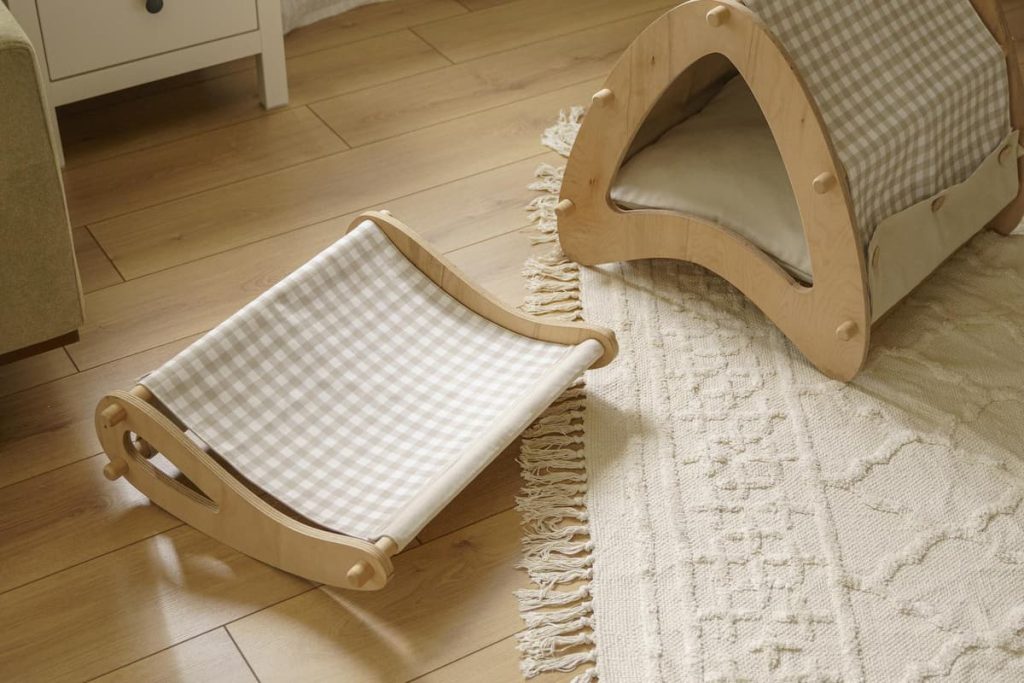
Aesthetic Integration: A Pet House Should Blend Into the Environment, Not Interrupt It
A well-chosen outdoor pet house should feel like it belongs to the space, not like it was placed there as an afterthought.
This is where material, color, and proportion become more important than most buyers expect.
Natural wood—especially cedar or light-toned timber—works well in gardens and relaxed outdoor spaces because it reflects light softly and ages in a way that feels natural rather than worn. Painted finishes, when done in muted tones like off-white, sand, or warm grey, can integrate beautifully into more structured patios or coastal-style environments.
What often goes wrong is not the material itself, but how it is executed. Glossy finishes, overly bright colors, or overly decorative shapes tend to look temporary. They draw attention for the wrong reasons and rarely age well outdoors.
Shape matters too. A steep, classic roof can feel warm and traditional, while a flatter profile feels more modern and restrained. The key is consistency. The pet house should echo the language of the space around it—whether that space leans rustic, coastal, or contemporary.
A good outdoor pet house does not try to stand out.
It quietly fits in.
Comfort Is a System: Warmth, Dryness, Shelter, and Psychological Security
Comfort in an outdoor pet house is often misunderstood. It is not just about warmth—it is about creating a stable and protected micro-environment.
Animals are naturally drawn to spaces that feel enclosed and controlled. This is why oversized pet houses often perform poorly. Too much interior volume allows heat to escape and makes the space feel exposed rather than safe.
A properly sized house should allow the pet to stand, turn, and lie down comfortably—but still feel contained. This helps retain body heat during cooler nights and creates a more secure resting environment.
The entrance design plays a major role here. A wide, centered doorway may look open and inviting, but it allows wind and rain to move directly into the shelter. A smaller, slightly offset entrance creates a protected interior zone—where the pet can rest away from airflow and external disturbance.
Dryness is just as important as warmth. Even a well-insulated house becomes uncomfortable if moisture builds up inside. A raised floor immediately improves comfort by preventing cold transfer from the ground and allowing air to circulate underneath.
Lighting and placement also influence comfort. Direct sunlight entering the doorway can overheat the interior during the day, while a poorly positioned house may expose the pet to constant wind. A shaded, stable, and slightly enclosed position almost always creates a better living experience than an exposed one.
True comfort comes from controlled space, not open space.
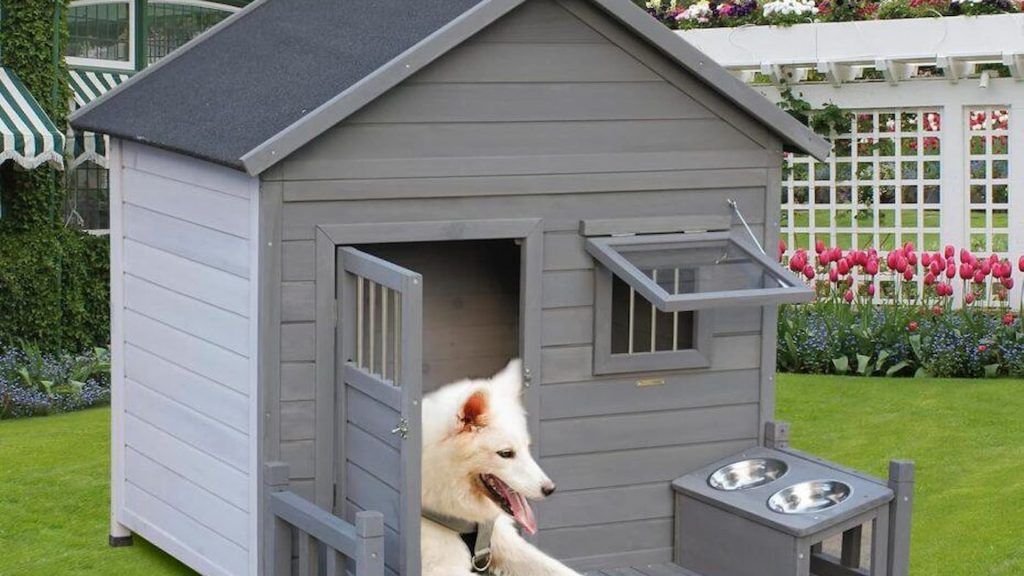
Rain Protection: The Difference Between “Covered” and Actually Weatherproof
Many outdoor pet houses are described as “weather-resistant,” but that does not always mean they handle rain well.
Real rain protection depends on structure, not just material.
A slanted or pitched roof is one of the most important features. It allows water to run off immediately instead of pooling. Flat roofs may look modern, but they often retain water, which leads to long-term damage and leakage.
Roof overhangs (eaves) are equally important. Without them, rainwater can drip directly into the entrance, especially during wind-driven rain. A small extension of the roof can significantly reduce this problem.
Joint construction also matters. Even with good materials, poorly sealed or loosely fitted panels can allow water to seep in over time. The best designs guide water away from vulnerable areas instead of relying on material alone to resist it.
A pet house that is truly rain-resistant does not just block water—it actively redirects it away from the interior.
Moisture Control: Preventing Dampness, Mold, and Long-Term Damage
Moisture is one of the most damaging forces in an outdoor environment—and one of the least visible at first.
When a pet house sits directly on the ground, it absorbs moisture from soil, grass, and condensation. Over time, this leads to damp interiors, unpleasant odors, and structural decay. Even if the house looks fine externally, the interior environment becomes less comfortable and less hygienic.
An elevated base is one of the simplest and most effective solutions. By lifting the structure just a few inches above the ground, you allow airflow underneath and reduce constant exposure to moisture. This also helps prevent insects and small animals from nesting beneath the house.
Ventilation must be balanced carefully. Too little airflow traps humidity, while too much airflow reduces warmth. The goal is not a breezy interior, but a dry and stable one.
Material choice also plays a role. Some materials absorb moisture more easily, while others resist it. But even the best material cannot compensate for poor structural design. Moisture control is achieved through elevation, airflow, and water management—not just surface resistance.
Thermal Insulation: Keeping the Interior Stable Across Seasons
Thermal performance is what determines whether a pet house is usable year-round or only under mild conditions.
Solid wood, especially thicker boards like cedar, provides natural insulation. It slows the transfer of heat, helping the interior stay cooler during hot days and warmer during colder nights.
In more extreme climates, double-wall construction becomes important. This design creates an air gap between layers, which acts as insulation and reduces rapid temperature changes.
However, insulation alone is not enough.
Placement plays a critical role. Even a well-insulated house can overheat if placed in direct sunlight for long periods. A shaded location prevents the “greenhouse effect,” where heat builds up inside the structure faster than it can escape.
Similarly, reducing drafts through proper entrance placement helps maintain warmth. A house that blocks wind effectively will feel noticeably warmer, even without additional insulation layers.
Thermal comfort is not about making the house “warm.”
It is about making the temperature stable and predictable.
Durability Over Time: Materials, Construction, and Maintenance Reality
Durability is not just about surviving weather—it is about maintaining structure, appearance, and usability over time.
Wood, when properly treated, can last for years and develop a natural patina that still looks appropriate in outdoor settings. But without proper sealing and design, it can absorb moisture, warp, or deteriorate.
Plastic and resin materials can be extremely durable if they are UV-stabilized and structurally reinforced. Without UV protection, they become brittle, fade unevenly, and crack under sun exposure.
Painted finishes must also be evaluated carefully. Exterior-grade finishes hold up better than decorative coatings. A soft matte finish tends to age more gracefully than glossy surfaces, which show wear more quickly.
Ease of maintenance is often overlooked but critical. A house that cannot be opened, cleaned, or dried easily will degrade faster simply because it is harder to care for. Removable roofs, accessible interiors, and washable surfaces extend the life of the product significantly.
Durability is not just what the house is made of.
It is how it behaves after repeated exposure and use.
Final Thought: A Shelter Should Work Quietly in the Background of Everyday Life
The best outdoor pet houses are not the ones that look impressive in isolation.
They are the ones that, once placed, feel natural in the space, comfortable for the pet, and reliable over time.
They stay dry after rain.
They remain stable in temperature.
They continue to look appropriate in the yard.
And most importantly, they create a space where your pet chooses to rest—not just a structure that happens to exist.
At the same time, for many homes—especially those with a brighter, more styled outdoor space—the visual side becomes just as important.
A well-designed shelter can also contribute to the overall atmosphere, adding a sense of lightness and cohesion rather than feeling purely functional.
👉 If you’re looking for options that combine performance with a brighter, more aesthetic design, you can explore our next guide:
Check out this practical guide to outdoor doghouses for your yard.
In that guide, we break down how lighter tones, clean finishes, and thoughtful materials can create a pet house that not only performs well outdoors, but also elevates the visual feel of your space.